
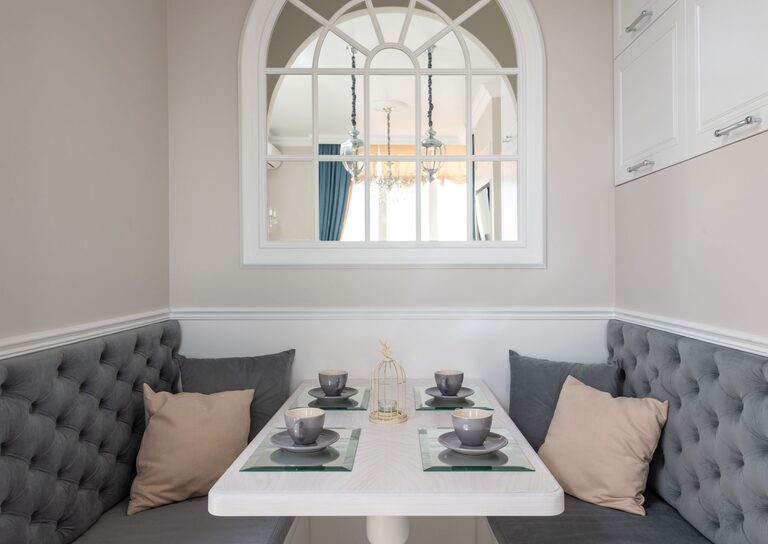
Why Create a Breakfast Nook?
A breakfast nook can turn an unused kitchen corner into one of the most welcoming spaces in your home. It gives you a comfortable place to enjoy coffee, prepare a casual meal, read a recipe, or linger over breakfast with family and friends.
Unlike a formal dining room, a breakfast nook feels relaxed and easy to use. With the right layout, it can also make a small kitchen more functional by combining seating, dining space, and storage in one area.
The key is to balance comfort, practicality, and style. Choose durable materials that can handle everyday use, then add soft textures and personal touches to make the space feel inviting.
Choose the Best Location
Start by looking for an area with natural light and enough room to move comfortably. Common locations include:
- A corner beside a kitchen window
- An unused section of an open-plan kitchen
- A wide hallway near the kitchen
- A small sunroom or enclosed porch
- A corner near a sliding door or patio entrance
Before buying furniture, measure the space carefully. Mark the length and width of the nook with painter’s tape on the floor. This makes it easier to visualize the table and seating arrangement.
Leave enough room for people to pull out chairs and walk around the table. A clear path of about 30 to 36 inches is generally comfortable for everyday movement. Also check nearby doors, drawers, appliances, and windows to make sure nothing will be blocked.
Select a Comfortable Seating Arrangement
The seating is the main feature of a breakfast nook, so comfort should guide your choices. A built-in bench is a popular option because it uses space efficiently and can provide hidden storage. However, freestanding furniture may be easier to rearrange or take with you if you move.
Built-In Bench Seating
A built-in bench can fit neatly into a corner and create a clean, finished appearance. It works especially well in L-shaped spaces or beneath windows.
For a comfortable bench, consider:
- A seat height of about 17 to 19 inches
- A seat depth of about 18 to 22 inches
- A firm cushion with a washable cover
- A supportive back cushion or wall-mounted backrest
- Rounded corners where possible
If you plan to build the bench yourself, use strong, stable materials and anchor the structure securely. Add a hinged lid or pull-out drawers if you want storage for table linens, cookbooks, serving dishes, or small kitchen tools.
Freestanding Seating
For a more flexible setup, pair a small table with two chairs and a bench or compact settee. Mixing seating styles can make the nook feel less formal.
Choose chairs with supportive backs and seats that are easy to wipe clean. A small upholstered bench can add softness, while wooden or metal chairs provide contrast and durability.
Find the Right Table
The table should match the shape of the space without making it feel crowded. Round tables are useful in compact corners because they improve the flow around the seating area and eliminate sharp corners. Square tables work well in evenly shaped spaces, while rectangular tables are a good choice for longer nooks.
When choosing a table, think about how you will use it. A small table may be enough for morning coffee, but a larger surface is better if you regularly roll out dough, serve several dishes, or invite guests.
Look for useful features such as:
- A drop-leaf design for flexible seating
- A pedestal base that provides more legroom
- A durable, easy-to-clean tabletop
- A finish that complements the kitchen cabinets
- Rounded edges for a softer appearance
Keep the table proportional to the bench and chairs. A table that is too large will make the nook difficult to navigate, while one that is too small may look unfinished.
Add Warm, Practical Lighting
Good lighting helps the breakfast nook work throughout the day. Natural light is ideal, but layered lighting gives you more flexibility on cloudy mornings or relaxed evenings.
A pendant light centered over the table can create a clear focal point. Choose a fixture that is sized for the table and high enough to avoid blocking conversation. A dimmable light allows you to switch from bright task lighting to a softer atmosphere.
You can also add:
- A small wall sconce for gentle evening light
- Battery-powered lamps on a nearby shelf
- Under-shelf lighting for a built-in bench
- Curtains or shades that filter strong sunlight
Avoid placing cords where they could become a tripping hazard. If you are adding a hardwired fixture, hire a qualified professional to complete the electrical work.
Use Color and Texture to Create Comfort
A breakfast nook feels cozy when it includes a mix of welcoming textures. Start with a simple color palette that connects to the rest of the kitchen. Warm whites, soft greens, muted blues, natural wood tones, and gentle earth colors can all create a calm backdrop.
Then add layers through:
- Seat cushions and washable covers
- A small rug under the table
- Textured curtains or woven shades
- Placemats and cloth napkins
- A throw blanket for a bench or settee
- A centerpiece such as a bowl of fruit or a small vase
Choose fabrics that are easy to clean, especially if the nook is used by children or located near food preparation areas. Performance fabrics, removable covers, and stain-resistant finishes can help the space stay fresh with less effort.
A rug can define the nook and make it feel like a separate zone. Select a low-pile or flat-weave style so chairs can move easily. Washable rugs are especially useful in busy kitchens.
Include Smart Storage
A breakfast nook can provide valuable storage without taking up extra floor space. Use the area beneath a bench for less frequently used items, such as seasonal serving pieces or picnic supplies.
Open shelves nearby can hold everyday dishes, mugs, cookbooks, or jars of cooking ingredients. Keep the shelves organized with baskets or matching containers so the display looks intentional.
If you have limited room, consider a narrow wall shelf above the bench. It can hold artwork, a small plant, or a few useful kitchen items without interfering with the table.
Avoid overcrowding the storage. A cozy nook should feel calm, not packed. Keep frequently used items within easy reach and store occasional items out of sight.
Make It Ready for Weekend Cooking
The best breakfast nooks support the way you actually cook and relax. Keep a few practical items close by, such as a recipe stand, cutting board, serving tray, or container for napkins.
A nearby rolling cart can provide extra workspace when preparing pancakes, pastries, or a large weekend breakfast. It can also be moved aside when the meal is finished.
Consider creating a small breakfast station with:
- A coffee or tea setup
- A basket for bread and baked goods
- Small jars for sugar, spices, or toppings
- A tray for mugs and utensils
- A container for fresh fruit
Keep the cooking area uncluttered by returning items to their storage spots after use. The nook should make weekend cooking easier rather than create another surface that needs constant attention.
Finish with Personal Details
Finally, add a few details that make the space feel like your own. Hang a favorite print, display a handmade bowl, or place a small plant near the window. Seasonal touches, such as fresh flowers in spring or a woven runner in autumn, can refresh the nook without a complete redesign.
The goal is not to create a showroom. It is to build a comfortable corner that encourages slower mornings, shared meals, and enjoyable time in the kitchen. With thoughtful measurements, supportive seating, warm lighting, and practical storage, even a small corner can become a favorite part of your home.