
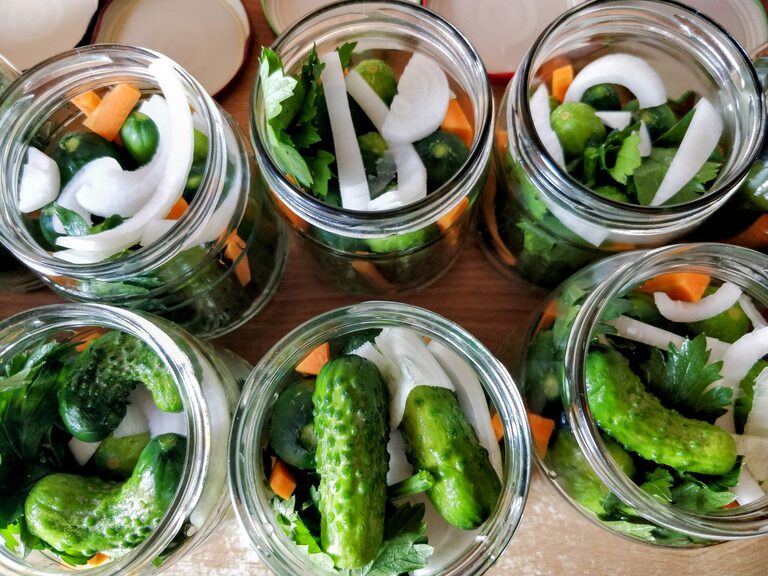
Homemade pickles make thoughtful gifts because they are colorful, useful, and easy to personalize. You do not need a large garden or special equipment to get started. With a few clean jars, fresh produce, and a simple vinegar brine, you can create small batches for birthdays, holidays, host gifts, or weekend gatherings.
These ideas are refrigerator pickles, meaning they are stored in the refrigerator rather than preserved on a shelf. They are quick to prepare and best enjoyed within a few weeks. For shelf-stable canning, always use a tested recipe and follow current food preservation guidance carefully.
What You Need to Get Started
Small-batch pickling is flexible, but a few basic supplies make the process easier:
– Pint or half-pint glass jars with lids
– A saucepan for heating the brine
– A cutting board and sharp knife
– Measuring cups and spoons
– Tongs or a wide-mouth funnel
– Fresh vegetables, fruit, herbs, or spices
– Vinegar labeled with 5 percent acidity
Choose jars that are free from cracks or chips. Wash them well with hot, soapy water, rinse thoroughly, and allow them to dry before filling. Clean equipment helps your pickles stay fresh and pleasant.
A simple refrigerator brine usually combines vinegar, water, salt, and a small amount of sugar. Garlic, peppercorns, mustard seeds, dill, bay leaves, and red pepper flakes can add extra flavor.
A Simple Refrigerator Pickle Brine
This basic brine works well for many vegetables:
– 1 cup 5 percent acidity vinegar
– 1 cup water
– 1 tablespoon kosher salt
– 1 tablespoon sugar, optional
Place the ingredients in a saucepan and warm them over medium heat, stirring until the salt and sugar dissolve. The brine does not need to boil. Pour it over prepared vegetables while warm, leaving a little space at the top of each jar.
For refrigerator pickles, keep the vinegar, water, and salt proportions consistent. Avoid reducing the vinegar or replacing it with a less acidic product. If you want to make a shelf-stable product, use a tested canning recipe instead of adapting a refrigerator pickle recipe.
Project One: Classic Cucumber Pickles
Cucumber pickles are a familiar favorite and one of the easiest projects for beginners.
Ingredients
– 2 small pickling cucumbers or 1 large cucumber
– 1 garlic clove, lightly crushed
– 1 teaspoon dill seed or a few sprigs of fresh dill
– 1 teaspoon black peppercorns
– Prepared refrigerator brine
Slice the cucumbers into spears, rounds, or sandwich-friendly chips. Add the garlic, dill, and peppercorns to a clean jar, then pack in the cucumber pieces without pressing them too tightly.
Pour in enough warm brine to cover the cucumbers. Let the jar cool slightly, cover it, and refrigerate. The flavor will develop after about 24 hours, but the pickles are often even better after two or three days.
For a crisp texture, use firm, fresh cucumbers and avoid overpacking the jar.
Project Two: Bright Pickled Red Onions
Pickled red onions add color and a tangy flavor to tacos, sandwiches, salads, grain bowls, and grilled foods. They also make an attractive gift because the onions turn a vivid pink in the brine.
Ingredients
– 1 medium red onion
– 1 teaspoon black peppercorns
– 1 small bay leaf, optional
– Prepared refrigerator brine
Slice the onion into thin rings or half-moons. Separate the pieces with your fingers and place them in a jar with the peppercorns and bay leaf. Pour the warm brine over the onions, making sure they are covered.
The onions are ready to use after about 30 minutes, although their flavor will become smoother overnight. A small jar of pickled onions pairs well with a loaf of bread, a block of cheese, or a set of serving utensils for a simple host gift.
Project Three: Carrot and Jalapeno Pickles
For a colorful, zesty option, combine carrots with jalapeno peppers. This mixture is inspired by the pickled vegetables often served with sandwiches and savory dishes.
Ingredients
– 2 medium carrots, sliced into thin sticks
– 1 jalapeno, sliced into rings
– 1 garlic clove
– 1 teaspoon dried oregano
– Prepared refrigerator brine
Place the carrots, jalapeno, garlic, and oregano in a jar. Pour in the warm brine and let the mixture cool before refrigerating.
The carrots will remain pleasantly crisp, while the jalapeno adds heat. For a milder version, remove the jalapeno seeds or replace some of the pepper with thinly sliced bell pepper. When giving this as a gift, label the jar clearly as spicy.
Project Four: Pickled Apples or Pears
Firm fruit can make an unexpected and elegant pickle. Pickled apples and pears work well with roasted meats, salads, sharp cheeses, and crackers.
Ingredients
– 1 firm apple or pear
– 1 small cinnamon stick
– 2 whole cloves, optional
– Prepared refrigerator brine
Slice the fruit into thin wedges or matchsticks. Add the cinnamon and cloves to the jar, then pack in the fruit. Pour the warm brine over the top.
Because fruit softens more quickly than many vegetables, enjoy this batch within several days for the best texture. To help prevent browning while you prepare the jar, work quickly and keep the sliced fruit covered with the brine as soon as possible.
How to Turn Pickles Into Gifts
Presentation makes a small jar feel special. Wipe the outside of each jar clean and add a simple label with:
– The name of the pickle
– The date it was made
– A “Keep Refrigerated” note
– A suggested use
– A reminder to enjoy it within a few weeks
Tie on a piece of ribbon or kitchen twine, or place the jar in a small basket with crackers, cheese, bread, or a wooden spreader. Use small jars when creating several gifts so each recipient receives a fresh portion.
Storage and Gifting Tips
Refrigerate the pickles as soon as the jars have cooled. Keep the vegetables covered by brine and use clean utensils when serving. If the pickles develop an unusual smell, appearance, or texture, discard them.
These refrigerator pickles should not be stored at room temperature or shipped without reliable temperature control. Give them directly to local recipients and remind them to keep the jars cold.
With a few simple ingredients and colorful produce, small-batch pickling becomes an easy, creative way to make homemade gifts. Try one classic recipe first, then experiment with herbs, spices, and seasonal vegetables while keeping the basic brine proportions consistent.